Why nutrients matter every day
Vitamins, minerals, protein, carbohydrates, fats, fiber, and electrolytes help the body make energy, move muscles, repair tissue, support blood, protect bones, digest food, and keep the nervous system working.
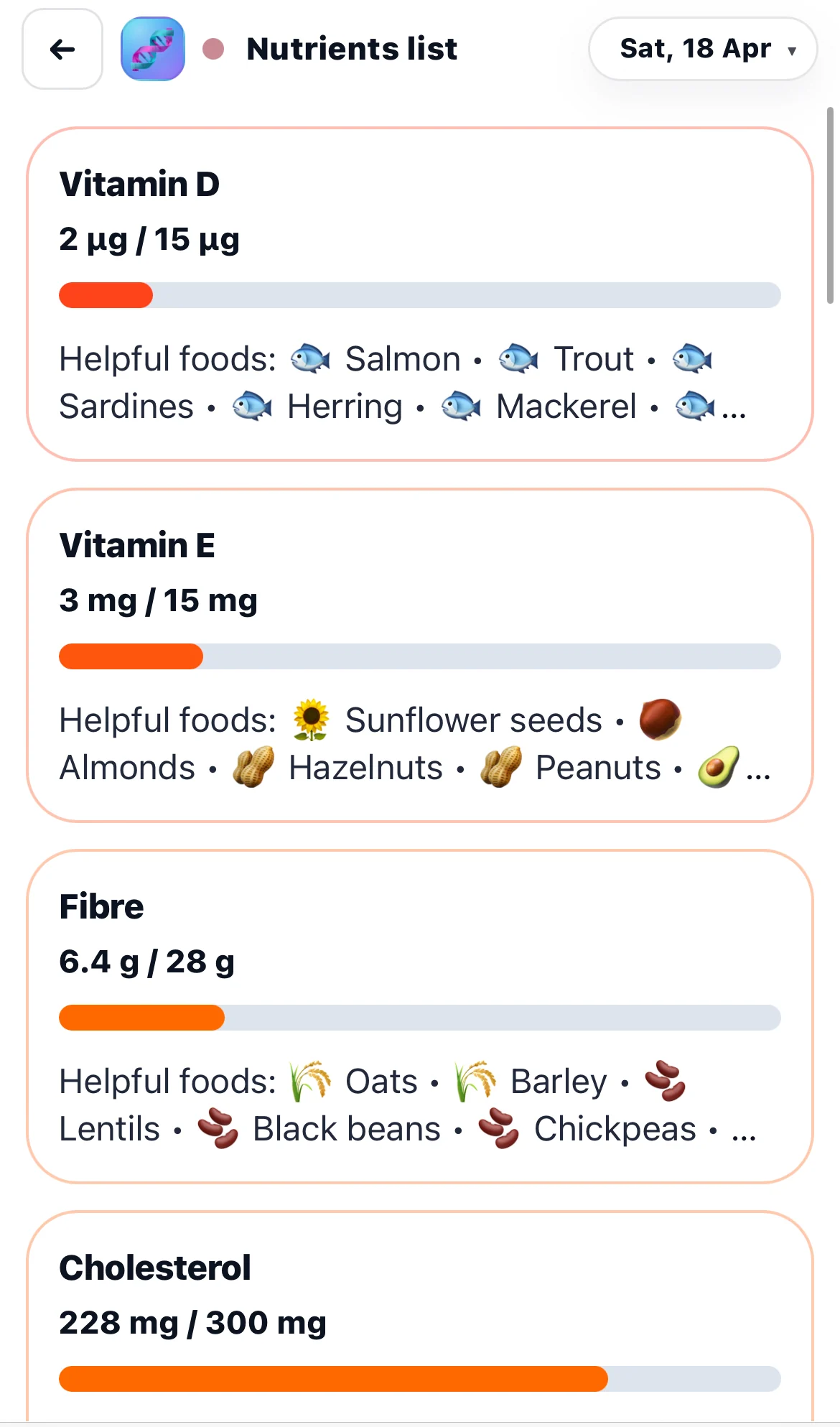
Chick Nutrients shows whether the day is supporting the body, not just fitting a calorie target. It helps you see weak food quality, missing nutrition, low variety and the gaps that can make consistency harder.
This is where Chick starts to feel deeper than a food log because it explains quality as well as quantity.
A day can fit a calorie target while still missing key vitamins, minerals, fibre or protein. That can lead to more hunger, less satisfaction, weaker recovery and a style of weight loss that is harder to maintain.
Chick makes that visible so you can improve meals without guessing. Calories still matter, but nutrient quality helps food, training, energy and progress work together.
Nutrition affects energy, recovery, fullness, digestion, bones, muscles, blood, skin, immunity and long-term health. If the body keeps getting a narrow range of foods, it becomes easier to drift into cravings, low satisfaction, and poor consistency.
That is why Chick treats nutrition as a real part of the weight loss system rather than a hidden bonus. It connects meal records, calorie habits, nutrient quality, and recovery needs in one clearer picture.
When you can see what is low, they can make the next meal smarter instead of simply smaller. That could mean more protein, more fiber, more variety, better food density, or fewer empty-calorie choices.
This is one of the reasons Chick feels practical: the nutrition view does not end with a chart. It supports the next meal, the next workout, and the next weight loss decision.
Daily recommended intake and Daily Value numbers give users a reference point. They are not a perfect personal prescription, but they make the day readable: some nutrients are goals to build toward, while others, such as sodium and cholesterol, are usually limits to watch.
Chick uses that idea in a practical way. Instead of only saying “you ate fewer calories,” Chick helps you see whether a smaller appetite still gave the body enough protein, fiber, vitamins, minerals, and other important nutrition. This makes Chick stronger for people who care about weight loss, fitness, and a healthy body.
Vitamins, minerals, protein, carbohydrates, fats, fiber, and electrolytes help the body make energy, move muscles, repair tissue, support blood, protect bones, digest food, and keep the nervous system working.
During weight loss, every bite has to work harder. Nutrient-dense food can support fullness, muscle, training, recovery, digestion, and consistency while you are eating fewer calories.
If injections, tablets, strict dieting, illness, stress, or any other method makes someone eat much less, nutrient shortfalls become easier to miss. Chick helps by making low nutrients visible before “eating less” turns into “getting too little.”
This guide keeps the language practical. Chick does not diagnose deficiencies. The goal is simpler: make nutrition easier to understand inside real meal logging, so calorie control can also support weight loss, fitness, recovery, meal quality, and a healthier body.
Body: Protein helps build and repair muscles, organs, enzymes, skin, hair, and immune cells.
Weight loss: Protein supports fullness and helps protect lean muscle while calories are lower.
Reduced appetite: If a person eats very little, low protein can mean weaker recovery, more muscle loss, more hunger later, and poorer meal satisfaction. Chick helps by keeping protein visible next to calories.
Body: Carbohydrates are a main energy source for the brain, muscles, training, and daily movement.
Weight loss: The right carbohydrate choices, especially higher-fiber foods, can make lower-calorie eating feel more sustainable.
Reduced appetite: If carbohydrate intake becomes too low for that person, they may feel flat, tired, foggy, or weaker during exercise. Chick helps you see whether “eating less” has also removed useful fuel.
Body: Fat helps absorb vitamins A, D, E, and K, supports cells and hormones, and makes meals more satisfying.
Weight loss: A sensible amount of fat can improve fullness, but very high-fat meals can also raise calories quickly.
Reduced appetite: If fat drops too low, meals may become less satisfying and fat-soluble vitamin intake can suffer. Chick helps you balance calories with food quality instead of simply cutting everything.
Body: Fiber supports digestion, gut health, cholesterol control, and steadier blood sugar after meals.
Weight loss: Fiber-rich foods can increase fullness without adding many calories, which can make weight loss easier to maintain.
Reduced appetite: Low fiber can contribute to constipation, poor fullness, and a diet that feels smaller but not healthier. Chick helps highlight fiber so you remember beans, oats, lentils, fruit, vegetables, seeds, and whole grains.
Body: Cholesterol is used by the body for cell membranes, bile acids, and hormones, but the body can make cholesterol itself.
Weight loss: For most users, cholesterol is a nutrient to watch as a limit, not a target to chase higher.
Reduced appetite: Very low food intake does not usually create a dietary cholesterol “deficiency,” but avoiding too many nutrient-rich foods may reduce protein, vitamin D, B12, iron, and healthy fats. Chick helps you look at the whole nutrition picture, not one number alone.
Body: Sodium helps with fluid balance, nerve signals, and muscle contraction.
Weight loss: Too much sodium can hide progress through water retention and is often high in ultra-processed foods.
Reduced appetite: Sodium is usually a limit, but very low intake with vomiting, heavy sweating, or poor fluids can cause problems. Chick helps you see whether sodium is repeatedly high or unusually low in context.
Body: Potassium supports muscles, nerves, fluid balance, and normal heart rhythm.
Weight loss: Potassium-rich foods such as fruit, vegetables, beans, and potatoes often bring volume, fiber, and useful nutrition for fewer calories.
Reduced appetite: If someone skips produce and balanced meals, low potassium intake can show up as weakness or cramps for some people. Chick helps you notice when the day needs more potassium-rich food.
Body: Calcium supports bones, teeth, muscle contraction, nerve signaling, and blood clotting.
Weight loss: During weight loss, protecting bone and muscle matters, especially when training, calories, or dairy intake changes.
Reduced appetite: If smaller meals remove dairy, fortified foods, tofu, sardines, or greens, calcium can fall short. Chick helps make calcium visible before a low-calcium pattern becomes normal.
Body: Iron helps red blood cells carry oxygen and supports energy metabolism.
Weight loss: Low iron can make movement, training, and daily activity feel harder, which can weaken consistency.
Reduced appetite: If appetite reduction removes meat, seafood, beans, lentils, spinach, or fortified grains, iron may drop. Chick helps you spot low iron days and build stronger meals.
Body: Magnesium helps muscles, nerves, energy production, blood sugar control, and bone health.
Weight loss: Magnesium-rich foods often come with fiber and food quality, such as nuts, seeds, beans, and whole grains.
Reduced appetite: Low intake can be easier when meals become repetitive or very small. Chick helps you notice when the day needs more magnesium-rich foods instead of only fewer calories.
Body: Zinc supports immunity, wound healing, taste, smell, skin, and normal growth and repair.
Weight loss: Zinc supports recovery and food enjoyment, both of which can affect long-term consistency.
Reduced appetite: If smaller meals remove seafood, meat, dairy, beans, nuts, or seeds, zinc can fall. Chick helps you keep the nutrition view focused on repair, not just calorie reduction.
Body: Vitamin A supports vision, immunity, skin, and healthy cells.
Weight loss: Vitamin A-rich foods, such as carrots, sweet potato, spinach, eggs, and dairy, can add volume and nutrition to lower-calorie meals.
Reduced appetite: If the diet narrows and colorful foods disappear, vitamin A intake can fall. Chick helps you see whether the day still includes enough nutrient-rich variety.
Body: Thiamin helps turn food into energy and supports the nervous system.
Weight loss: When calories are lower, the body still needs B vitamins to use the food that is eaten.
Reduced appetite: Very low food intake or repeated skipped meals can make thiamin intake weaker. Chick helps you see whether small meals still contain whole grains, beans, pork, seeds, or fortified foods.
Body: Riboflavin supports energy production, skin, eyes, and normal cell function.
Weight loss: Riboflavin helps the body use carbohydrates, fats, and protein while calories are being managed.
Reduced appetite: If smaller meals remove dairy, eggs, lean meat, mushrooms, almonds, or fortified foods, riboflavin can be low. Chick helps you catch that pattern.
Body: Niacin supports energy metabolism, skin, nerves, and digestion.
Weight loss: Niacin helps the body release energy from food, so it still matters when the food amount is smaller.
Reduced appetite: A very narrow diet can reduce niacin from poultry, fish, meat, peanuts, legumes, and fortified grains. Chick helps you keep small meals nutritionally useful.
Body: Vitamin B6 supports protein metabolism, brain function, immune function, and red blood cell formation.
Weight loss: As protein intake becomes more important, B6 helps the body use that protein well.
Reduced appetite: If appetite drops and the day loses fish, poultry, potatoes, chickpeas, bananas, or fortified foods, B6 can become low. Chick helps connect protein-focused meals with the vitamins that support them.
Body: Folate supports DNA production, red blood cells, and healthy cell growth.
Weight loss: Folate-rich foods, such as leafy greens, beans, lentils, and fortified grains, bring high nutrition value for the calories.
Reduced appetite: If smaller meals remove greens and legumes, folate can fall. Chick helps you see whether “light eating” still includes foods that support blood and cell health.
Body: Vitamin B12 supports nerves, red blood cells, and DNA production.
Weight loss: B12 helps protect energy and nerve health while food intake and meal patterns change.
Reduced appetite: If appetite reduction removes animal foods or fortified foods, B12 can be missed, especially for vegan or older users. Chick helps make B12 part of the nutrition conversation instead of an afterthought.
Body: Vitamin C supports collagen, skin, gums, immunity, antioxidant protection, and iron absorption.
Weight loss: Vitamin C-rich fruit and vegetables can add volume, freshness, and nutrition without many calories.
Reduced appetite: If small meals lose fruit, peppers, broccoli, potatoes, or citrus, vitamin C can drop. Chick helps you remember that better weight loss meals should still be colorful.
Body: Vitamin D helps the body absorb calcium and supports bones, muscles, and immune function.
Weight loss: Bone and muscle support matter during weight loss, especially when you are training or eating less.
Reduced appetite: If smaller meals remove oily fish, eggs, fortified dairy, or fortified alternatives, vitamin D may stay low. Chick helps you see vitamin D clearly and choose better next meals.
Body: Vitamin E acts as an antioxidant and supports immune and cell health.
Weight loss: Vitamin E often comes from foods that make meals satisfying, such as nuts, seeds, avocado, and plant oils.
Reduced appetite: If a user cuts too much fat or avoids nutrient-rich higher-calorie foods entirely, vitamin E can be harder to reach. Chick helps you balance portions without deleting useful nutrition.
Body: Vitamin K supports normal blood clotting and bone health.
Weight loss: Vitamin K-rich leafy greens can add volume, fiber, and micronutrients to lower-calorie meals.
Reduced appetite: If small meals remove greens and vegetables, vitamin K intake can fall. Chick helps you notice whether the day still includes enough green, nutrient-dense foods. People on blood-thinning medication should follow their clinician’s advice about vitamin K consistency.
The 22 nutrients above are the built-in foundation. Chick goes further by letting someone choose three custom nutrients in the Profile section and track them beside the standard nutrition list. That means the same meal records can show calories, protein, vitamins, minerals, fitness-supporting nutrients, and personal watch-list items in one place.
For one person, the priority might be polyphenols, collagen, taurine, omega-3, choline, or another nutrient they want to include more often. For another person, the priority might be something to limit, such as concentrated fructose from sweet drinks, too much caffeine, added sugar, trans fat, phosphate additives, or preservatives that do not suit them.
This is where Chick becomes more flexible than a simple calorie-only app. It can support weight loss while still helping people protect meal quality, fitness recovery, energy, digestion, heart-health habits, and the everyday choices that build a healthier body.
Inside Profile, three extra nutrition targets can be added to Chick. They can match a training goal, a weight-loss plan, a digestive concern, a plant-rich diet, a heart-health focus, or any food detail the person wants to see more clearly.
Custom tracking is not only for nutrients to increase. Sometimes the healthier choice is to notice what appears too often. A stronger nutrition view should make both sides visible: what supports the body and what may quietly work against progress.
Calories matter for weight loss, but they do not explain everything. Chick connects calories, nutrients, meals, appetite, fitness, and personal targets so meal records become a clearer guide for a healthy body.
This is not a complete list. Chick can support calories, nutrients, meals, fitness, and weight loss while still leaving room for the details that matter to each person. Some custom choices are useful nutrients that are easy to miss when eating less. Others are ingredients or food compounds that are easy to overdo when packaged food, drinks, snacks, or “healthy-looking” products become routine.
The advantage is practical: instead of forcing every body into the same nutrition checklist, Chick helps each person decide which three extra items deserve attention alongside the standard nutrients.
Why it matters: Polyphenols are plant compounds found in foods such as berries, cocoa, tea, coffee, herbs, olives, beans, and colourful vegetables. They are often linked with plant-rich eating patterns and overall food quality.
Easy to miss: A low-calorie diet can become plain and repetitive, especially if fruit, vegetables, herbs, legumes, and plant variety disappear.
Custom tracking idea: In Chick, a weight-loss meal log can become a plant-variety check too, helping smaller meals stay colourful instead of simply low in calories.
Why it matters: Collagen is important for skin, tendons, ligaments, cartilage, and connective tissue. The body also needs enough protein and vitamin C to build its own collagen.
Easy to miss: People who eat very little, avoid protein, or cut meals too aggressively may not give the body enough building material for repair.
Custom tracking idea: Chick can place collagen-supporting foods beside protein, vitamin C, calories, and fitness recovery, so weight loss does not ignore repair and structure.
Why it matters: Taurine is an amino-acid-like compound involved in bile acids, fluid balance, the nervous system, muscles, and the heart. It is found in foods such as seafood, fish, and meat.
Easy to miss: Very small meals, vegetarian patterns, or low seafood intake can make taurine harder to get from food.
Custom tracking idea: Someone using Chick for fitness, training recovery, seafood intake, or a stronger nutrition routine can keep taurine visible without needing a separate spreadsheet.
Why it matters: EPA and DHA are omega-3 fats mostly found in oily fish and seafood. They are often discussed for heart, triglyceride, brain, and inflammation support.
Easy to miss: Many people eat little or no oily fish, and some lower-calorie diets remove higher-fat foods even when those foods are useful.
Custom tracking idea: Chick can show whether fish, seafood, or other omega-3 choices are actually appearing during the week, not just planned in someone’s head.
Why it matters: Choline supports cell membranes, the brain and nervous system, muscle control, and fat transport in the body.
Easy to miss: Choline can drop when eggs, meat, fish, dairy, soy, or balanced meals are reduced during weight loss.
Custom tracking idea: For people who avoid eggs or eat fewer animal foods, Chick can turn choline into a visible nutrition target beside calories, protein, and daily meal logs.
Why it matters: Creatine helps muscles rapidly produce energy, especially during strength training and short bursts of effort.
Easy to miss: Food creatine is mostly found in meat and fish, so intake may be lower in vegetarian or very low-meat diets.
Custom tracking idea: Chick can connect creatine-rich foods with strength training, calorie control, protein habits, and a weight-loss plan that still cares about performance.
Why it matters: Iodine helps the body make thyroid hormones, which are involved in metabolism, growth, and normal body function.
Easy to miss: Iodine may be low when seafood, dairy, eggs, or iodised salt are avoided. It can also be uneven in very “clean” diets that remove many common foods.
Custom tracking idea: Chick can make iodine a clear nutrition target for people who want their healthy eating plan to include more than calories and macros.
Why it matters: Selenium supports thyroid function and antioxidant enzymes, but very high intake is not better.
Easy to miss or overdo: Intake can be low in narrow diets, but it can also become too high from frequent Brazil nuts or supplements.
Custom tracking idea: Selenium is a good example of why Chick custom nutrients are useful: the goal is balance, not blindly pushing every number higher.
Why it matters: Copper helps with iron handling, connective tissue, the nervous system, and antioxidant enzymes.
Easy to miss: Copper is not usually a headline nutrient. It is found in foods such as shellfish, nuts, seeds, beans, whole grains, and cocoa.
Custom tracking idea: When a diet becomes smaller or more restricted, Chick can help meal records still show mineral variety, not just calorie totals.
Why it matters: Manganese supports enzymes involved in metabolism, bone formation, and antioxidant protection.
Easy to miss: It often comes from whole grains, nuts, legumes, tea, and plant foods, which can disappear when someone eats a narrow diet.
Custom tracking idea: Chick can make this quiet mineral part of a complete nutrition view for people who want weight loss with better food quality.
Why it matters: Phosphorus is needed for bones, teeth, cells, and energy use. However, phosphate additives in processed foods can push intake higher than expected.
Easy to overconsume: Processed meats, cola drinks, packaged foods, and some fast foods may contain phosphate additives that are not obvious at first glance.
Custom tracking idea: A person trying to reduce ultra-processed foods can use Chick as a meal log for additives, not only a calorie count for portions.
Why it matters: Added sugar can raise calories without bringing much fullness, protein, fiber, vitamins, or minerals.
Easy to overconsume: Sweet drinks, sauces, yoghurts, cereals, snacks, and “healthy-looking” bars can add sugar quickly.
Custom tracking idea: Chick can show whether a weight-loss calorie target is being spent on satisfying meals or quietly used up by sweet extras.
Why it matters: Fructose is a sugar found naturally in fruit, but concentrated sources such as sugary drinks, sweetened juices, syrups, and juice concentrates can be much easier to overconsume.
Easy to overconsume: Drinking fruit sugar is usually less filling than eating whole fruit, and large servings of juice can feel healthy while adding a lot of sugar.
Custom tracking idea: Chick can help separate whole fruit from concentrated sweet drinks, supporting calorie control, liver-friendly habits, and a more honest nutrition view.
Why it matters: Caffeine can improve alertness, but too much can disturb sleep, anxiety, heart racing, blood pressure, headaches, or stomach comfort for some people.
Easy to overconsume: Coffee, energy drinks, pre-workout drinks, tea, cola, chocolate, and some supplements can stack up across the day.
Custom tracking idea: Chick can connect caffeine timing with sleep, hunger, training energy, mood, and the next day’s weight-loss consistency.
Why it matters: Trans fat is generally something to avoid or keep as low as possible because it is linked with worse heart-health markers.
Easy to miss: Some fried foods, baked goods, shortenings, or imported packaged foods may still contain partially hydrogenated oils or small amounts of trans fat.
Custom tracking idea: A stricter Chick meal log can keep trans fat visible as a personal limit while the daily calorie view handles energy intake.
Why it matters: Saturated fat is not usually a target to chase higher. Many people watch it because high intake can make heart-health goals harder.
Easy to overconsume: Cheese, butter, cream, fatty meats, pastries, fast food, and some coconut-based products can push saturated fat up quickly.
Custom tracking idea: Chick can help weight loss move in the same direction as heart-health habits, instead of treating the scale as the only measure of progress.
Why it matters: Nitrates and nitrites can appear in cured and processed meats. They are not the same as nitrates naturally found in vegetables, so context matters.
Easy to overconsume: Bacon, sausages, ham, salami, hot dogs, and deli meats can become everyday foods without the pattern being obvious.
Custom tracking idea: Chick can turn processed meat intake into a clear food-quality marker inside a normal nutrition view and meal log.
Why it matters: Some people are sensitive to certain preservatives, including sulphites. Tracking can help them notice patterns in packaged foods and symptoms they may want to discuss with a clinician.
Easy to miss: Preservatives can appear in dried fruit, bottled drinks, sauces, processed potatoes, and packaged foods where the person is not expecting them.
Custom tracking idea: Chick gives sensitive eaters a simple place to watch preservative exposure beside calories, nutrients, meals, and healthy body goals.
Why it matters: Sugar alcohols can reduce sugar in some foods, but they may cause bloating, gas, or diarrhoea for some people when intake is high.
Easy to overconsume: “No sugar added” snacks, protein bars, gums, sweets, and low-carb desserts can contain several servings without feeling like much food.
Custom tracking idea: Chick can help connect digestive comfort with specific diet products, making the meal log more useful than a simple calorie count.
Why it matters: Alcohol is not an essential nutrient. It can add calories, affect sleep, reduce food control, and make recovery or consistency harder for some people.
Easy to undercount: Drinks are often forgotten, poured larger than a standard serving, or tracked without mixers and snacks.
Custom tracking idea: Chick can make a weight-loss plan more honest by placing alcohol beside calories, sleep, food choices, fitness recovery, and weekly habits.
Chick supports nutrition, calories, meals, fitness, weight loss, and education. It is not a medical diagnosis. Anyone using weight-loss medication, managing a medical condition, pregnant, experiencing symptoms, or worried about deficiency should speak with a qualified health professional.
Protein deepens one of the most important nutrition levers for weight loss and fitness. Logging helps the next meal record stay accurate.